Apple Vision Air
Concept Product Strategy
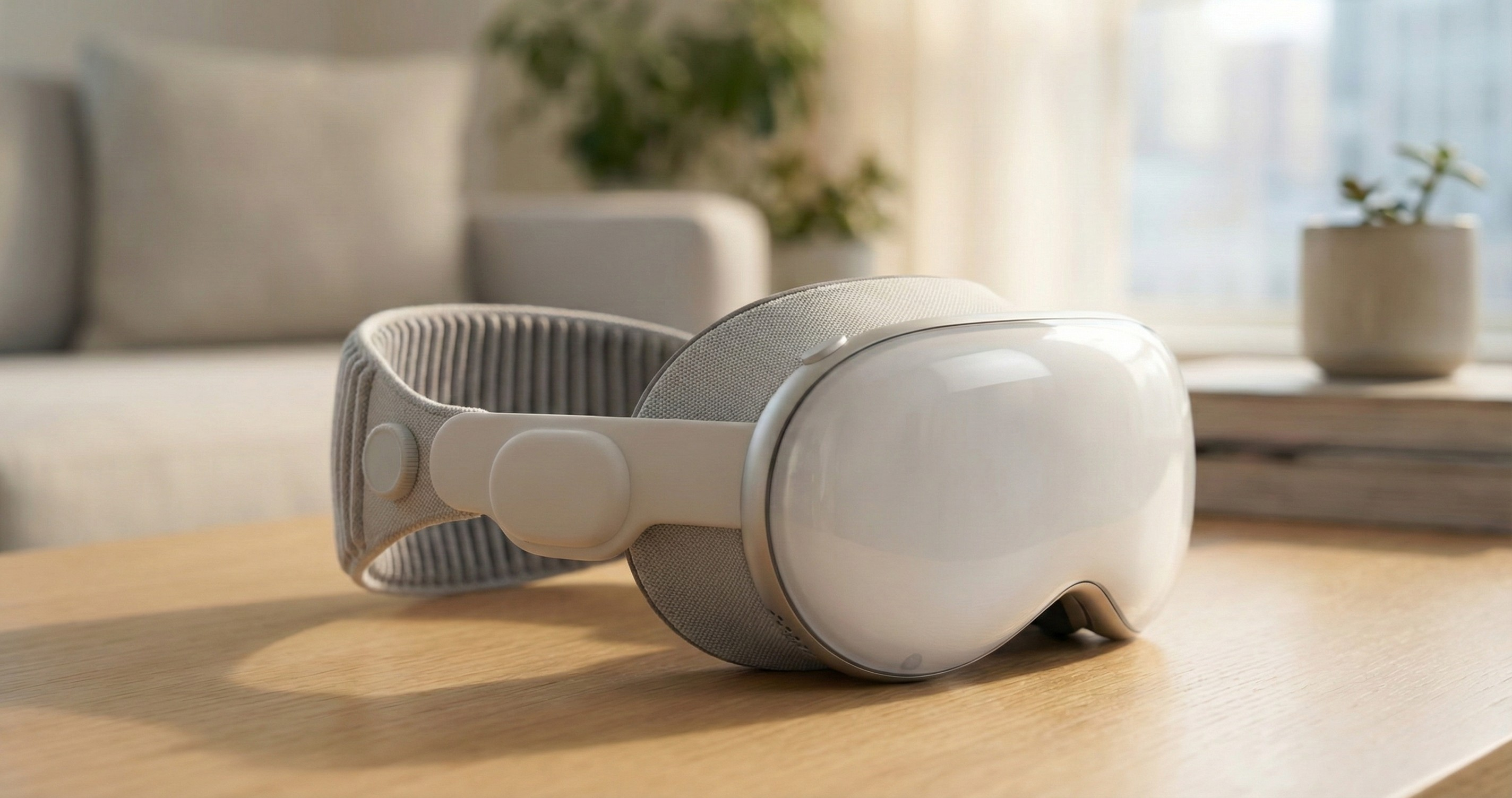
Apple Vision Air is a product strategy project exploring how spatial computing could evolve from a flagship product into an everyday computing platform. Building from Apple Vision Pro, the work examines adoption, portfolio positioning, and platform tradeoffs to propose a mid-premium spatial computer optimized for comfort, mobility, and daily use.
This project explores how Apple could evolve spatial computing from a breakthrough product into a mainstream computing layer.
Following the launch of Apple Vision Pro, spatial computing emerged as a credible new platform with strong technical foundations and ecosystem potential. The question that follows is not whether the technology works, but how it scales beyond early adopters while preserving Apple's brand, platform integrity, and long-term strategy.
Developed as part of a graduate-level Product Management course at Leavey School of Business, this work was intentionally structured to reflect how real product and strategy teams evaluate platform expansion opportunities. The scope spans market analysis, product definition, financial validation, positioning, and go-to-market planning.
The outcome is a proposed product strategy that examines how spatial computing could become more accessible, more habitual, and more deeply integrated into everyday workflows.
Why This Project Exists
Apple Vision Pro introduced spatial computing as a credible new platform. It proved what was possible when hardware, software, and ecosystem design came together at scale.
At the same time, Vision Pro revealed a familiar platform challenge. While technically impressive, adoption is constrained by weight, cost, and everyday usability. For most users, the device feels aspirational rather than habitual. It is experienced, not lived in.
This creates a strategic inflection point. For spatial computing to evolve from a breakthrough product into a mass-market platform, Apple must expand beyond early adopters without undermining the premium positioning or long-term VisionOS ecosystem.
The central question driving this project is therefore not about building a cheaper device. It is about identifying the right product and go-to-market strategy that can:
- Unlock mainstream adoption
- Preserve Apple's platform coherence
- Strengthen the VisionOS ecosystem
- Avoid internal cannibalization or brand dilution
This project explores whether a derivative product, deliberately optimized for comfort, mobility, and daily productivity, could serve as the bridge between Vision Pro and Apple's long-term spatial computing vision.
Project Scope and Approach
This project was structured as an end-to-end product strategy engagement, designed to mirror how a real product or consulting team would evaluate a platform expansion decision.
The scope covered the full product lifecycle, from market and opportunity assessment through product definition, financial validation, and go-to-market execution. Rather than optimizing for a single feature set or concept, the work focused on identifying the product strategy most likely to drive sustainable adoption while reinforcing Apple's platform advantages.
The approach combined:
- Framework-driven strategic analysis to evaluate market structure, competition, and ecosystem dynamics
- Customer-centric methods, including voice of customer and jobs-to-be-done, to ground product decisions in real user needs
- Financial modeling and forecasting to validate economic viability and portfolio fit
- Iterative concept development with explicit tradeoffs, rather than incremental optimization
- Go-to-market planning that aligned positioning, pricing, channels, and metrics to adoption outcomes
The project was executed in three distinct phases, each designed to reduce a different category of risk: strategic risk, product and investment risk, and execution and adoption risk. Insights and decisions from each phase directly informed the next, ensuring continuity rather than isolated analysis.
The Problem Worth Solving
Apple Vision Pro proved that spatial computing can be real, powerful, and deeply integrated into the Apple ecosystem. It established a new category and set a high bar for immersion, performance, and platform cohesion.
At the same time, Vision Pro surfaced a structural limitation. Despite its technical capabilities, the product remains difficult to integrate into everyday life. Weight, cost, and the intensity of immersive experiences make it better suited for intentional sessions than continuous, daily use. For many users, Vision Pro is impressive, but not habitual.
This creates a strategic tension for Apple. Platform technologies do not scale through excellence alone. They scale when they become part of routine behavior. Smartphones, laptops, and wearables succeeded not because they were the most advanced devices at launch, but because they fit naturally into how people live and work.
If spatial computing is to mature into a mass-market platform, Apple must solve for adoption without compromising the long-term integrity of VisionOS or the premium positioning of Vision Pro. The challenge is not whether spatial computing works. It is whether it can become comfortable, mobile, and practical enough to be used every day.
This project is anchored in that question. What would it take to move spatial computing from a breakthrough product into an everyday computing layer?
The Core Insight
Spatial computing will not scale through immersion alone.
Breakthrough products create awareness, but platforms scale through habit. For spatial computing to become a durable computing layer, it must fit naturally into everyday routines rather than demand intentional, immersive sessions.
The constraint is not technical capability. It is human behavior. Devices that succeed at scale are those that feel comfortable to wear, easy to move with, and practical to use for extended periods of time. They fade into the background of daily life instead of pulling users into a separate mode of interaction.
This insight reframes the problem. The next phase of spatial computing is not about making experiences more immersive. It is about making the technology lighter, more accessible, and more compatible with how people already work, create, and consume information.
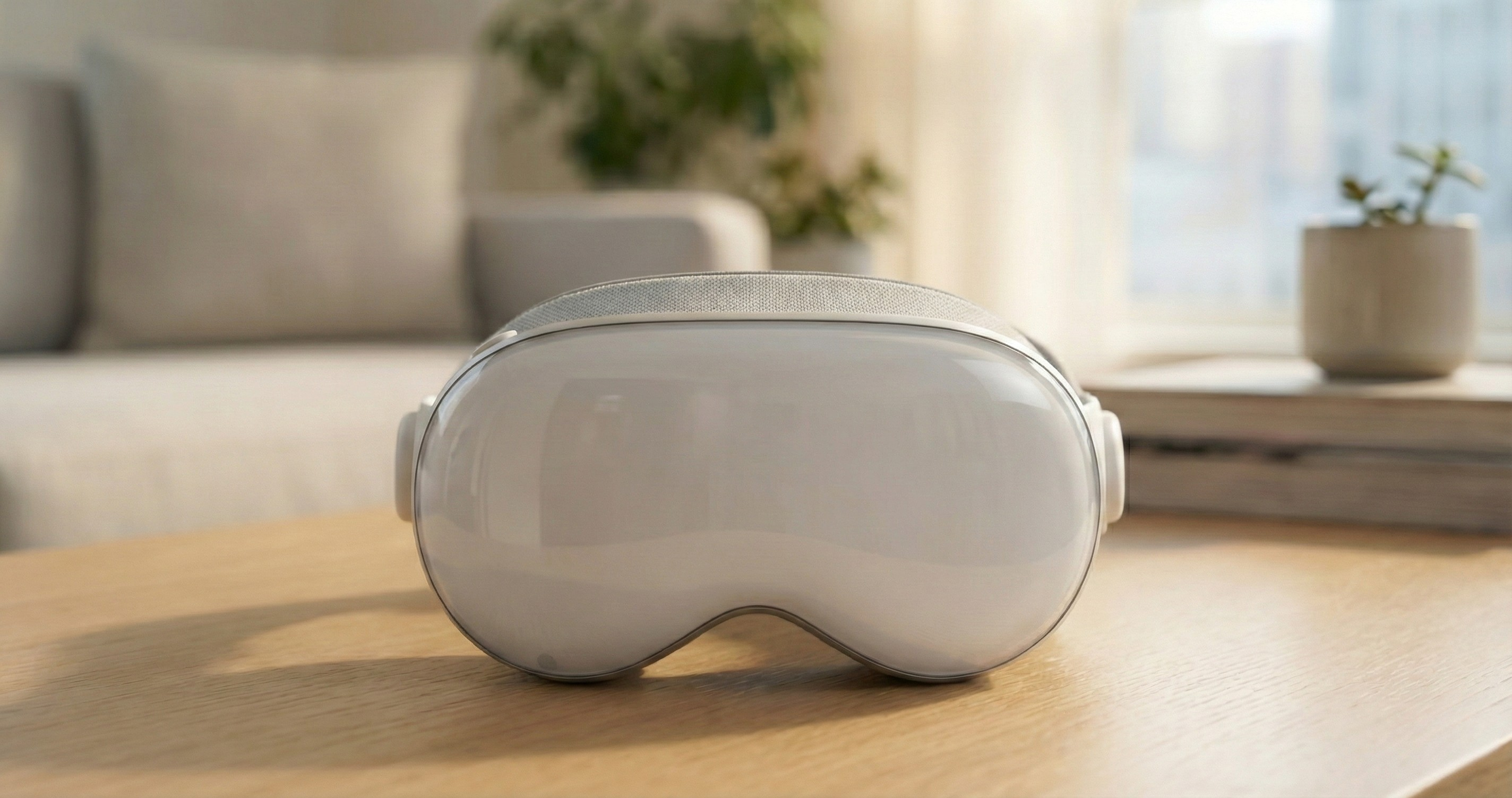
That realization became the foundation for the product strategy that follows.
The Product Strategy: Apple Vision Air
Apple Vision Air is a derivative spatial computer designed to bring spatial computing into everyday use without undermining the VisionOS platform or the premium positioning of Vision Pro.
Rather than competing with Vision Pro, Vision Air complements it. Vision Pro remains the flagship device for maximum immersion and performance. Vision Air is optimized for comfort, mobility, and extended daily use, addressing the adoption constraints that limit spatial computing today.
The product strategy behind Vision Air is grounded in a simple principle: reduce friction without reducing capability. This means prioritizing wearability, battery life, and everyday workflows over peak performance or maximum immersion.
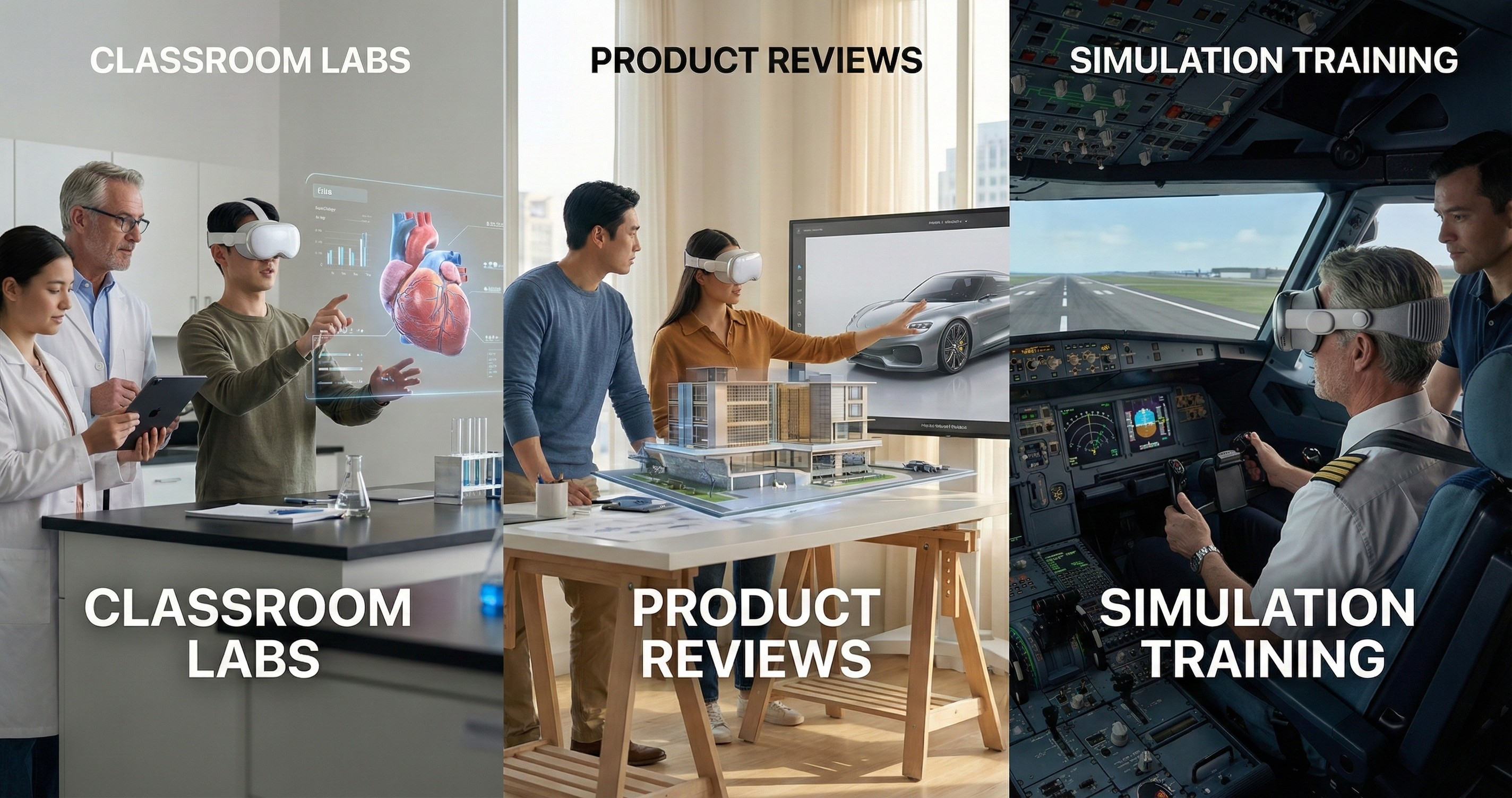
Vision Air is positioned as the device users can wear for hours, move with throughout the day, and integrate naturally into work, entertainment, and creation. It is not designed to replace laptops, tablets, or phones, but to layer spatial computing on top of them in a practical and approachable way.
By expanding the product line in this direction, Apple preserves the long-term integrity of VisionOS while unlocking a broader user base and accelerating ecosystem growth.
Key Tradeoffs and Decisions
Vision Air was shaped less by what it adds and more by what it deliberately avoids. Every major decision reflects a conscious tradeoff between adoption, capability, and portfolio integrity.
- Comfort and Wearability — Vision Air prioritizes weight reduction, balance, and long-duration comfort. The goal is not short, impressive sessions, but sustained daily use across work and personal contexts.
- Mobility and Battery Life — Extended battery life and ease of movement take precedence over peak performance. Vision Air is designed to move with users throughout the day rather than anchor them to a single location.
- Everyday Workflows — The product focuses on scenarios that users already repeat daily. Productivity, communication, media consumption, and light creation are favored over specialized or cinematic experiences.
- Less Immersion Than Vision Pro — Vision Air does not attempt to match Vision Pro on raw immersion or visual fidelity. That remains the role of the flagship device.
- No Attempt to Replace Existing Devices — Vision Air is not positioned as a laptop or phone replacement. It augments existing devices rather than competing with them.
- Controlled Scope Over Feature Creep — Advanced sensors, niche capabilities, and experimental features were intentionally excluded to preserve simplicity, reliability, and cost discipline.
These tradeoffs ensure that Vision Air expands the spatial computing market without cannibalizing Vision Pro or fragmenting the VisionOS ecosystem. More importantly, they align the product with real user behavior rather than aspirational use cases.
Vision Air is not designed to be the most powerful spatial computer Apple can build. It is designed to be the one people actually use.
Positioning and Go-To-Market
Vision Air is positioned as the everyday entry point to spatial computing. It is not marketed as a breakthrough device, but as a natural extension of how people already work, learn, and consume content within the Apple ecosystem.
The positioning deliberately avoids direct comparison with Vision Pro. Vision Pro remains the aspirational flagship. Vision Air is framed around approachability, comfort, and daily utility. This separation protects portfolio clarity while allowing each product to succeed on its own terms.
Morning — Seamless start to the workday
Target Segments: Vision Air is designed for users who are curious about spatial computing but unwilling to commit to the weight, cost, or intensity of Vision Pro. This includes knowledge workers, creators, students, and prosumers who value productivity and media consumption over maximal immersion.
Pricing Logic: Pricing sits in the mid-premium range, signaling quality and capability without crossing into luxury territory. The goal is to reduce economic friction while maintaining Apple's brand integrity and long-term margin discipline.
Distribution and Launch: Vision Air leverages Apple's existing retail and online channels, with in-store demos focused on everyday workflows rather than cinematic experiences. Early access programs and controlled rollout help seed usage without overwhelming the ecosystem.
Adoption and Metrics: Success is measured through habit formation rather than novelty. Key metrics emphasize daily active use, session duration, and cross-device integration rather than one-time purchases or launch hype.
By aligning positioning, pricing, and go-to-market execution around everyday use, Vision Air is designed to scale adoption while reinforcing the broader VisionOS platform.
Marketing Artifacts
To validate the product strategy beyond analysis, the work was translated into market-facing artifacts that reflect how Vision Air would be communicated to users. These artifacts are not speculative visuals. They are deliberate expressions of the positioning and go-to-market logic described above.
Advertisement
The Vision Air advertisement focuses on everyday moments rather than technical capability. The product is intentionally understated, appearing as a natural part of daily life instead of the center of attention.
The creative direction reinforces three core ideas:
- Spatial computing should feel effortless, not overwhelming
- The product should fade into routines rather than demand focus
- Vision Air is designed for continuity, not spectacle
The ad mirrors Apple's own brand language by prioritizing calm pacing, familiar environments, and outcome-driven storytelling.
Everyday moments with spatial computing
Product Website
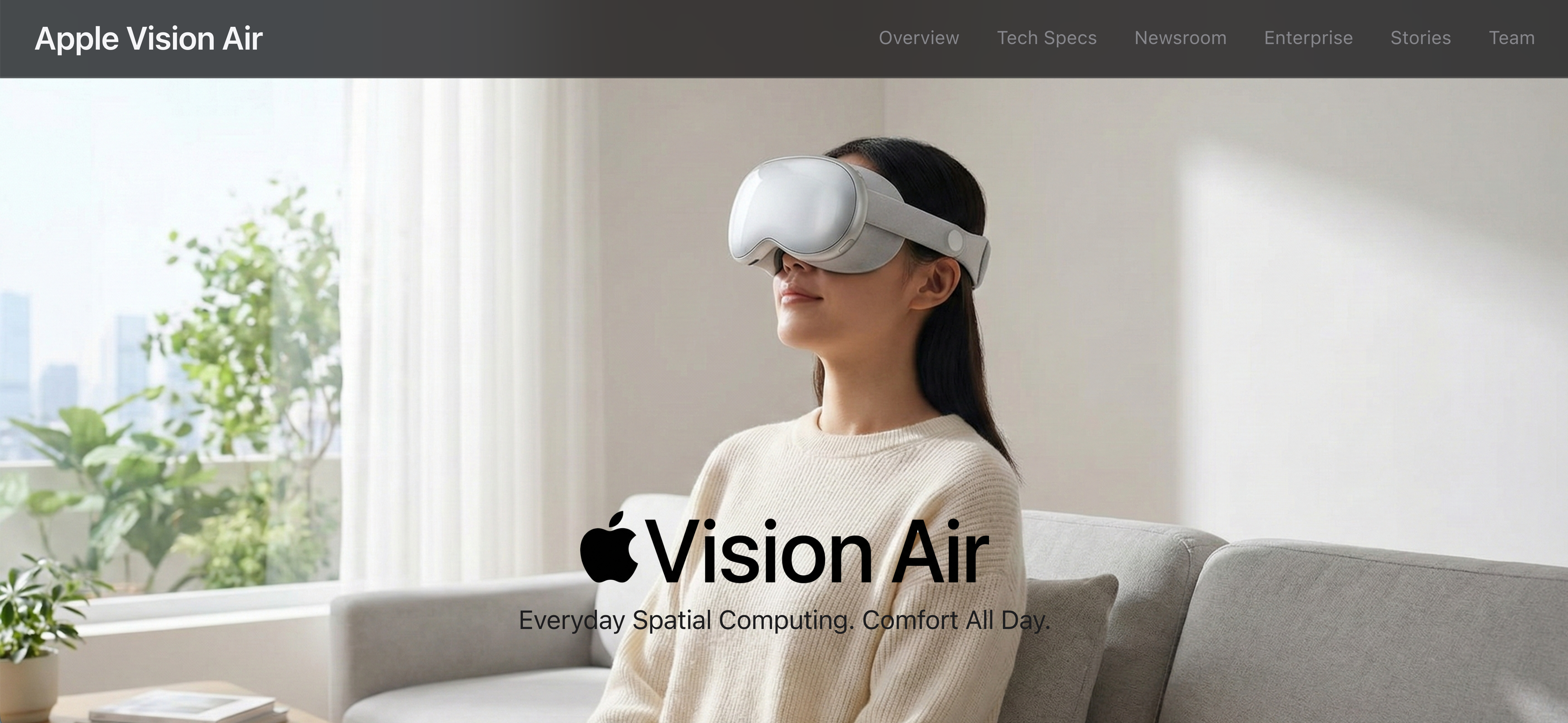
The accompanying website serves as a conceptual product landing page, translating strategy into messaging, hierarchy, and user flow.
The site emphasizes:
- Clarity over feature density
- Everyday use cases over technical demonstrations
- Confidence without justification
Rather than explaining spatial computing, the site assumes it and focuses on why Vision Air belongs in daily life. This reinforces the positioning of Vision Air as a practical extension of the Apple ecosystem.
Why These Artifacts Matter
Together, the ad and website demonstrate that the Vision Air strategy is not limited to slides or analysis. The product positioning holds when expressed through real user-facing communication.
They serve as a final validation step, showing how product strategy, brand, and go-to-market execution align into a coherent narrative.
Strategic Takeaways
Apple Vision Air is not a proposal for a single product. It is an exploration of how breakthrough platforms transition from novelty to normalcy.
Scaling a new computing paradigm requires more than technical excellence. It demands disciplined product strategy, clear portfolio boundaries, and an understanding of human behavior. Vision Air represents one possible path for spatial computing to evolve into an everyday layer without diluting the ambition or integrity of the VisionOS platform.
At a broader level, the work reflects how product managers must think when operating at the intersection of hardware, software, and ecosystem strategy. The most impactful decisions are often not about adding features, but about choosing the right constraints, making deliberate tradeoffs, and aligning execution with long-term platform goals.
Underlying this exploration is a core belief that continues to guide my approach to product management. The best products do not ask users to change who they are. They adapt to how people already live, work, and create.
Viewed through this lens, the Vision Air concept illustrates one possible direction for how spatial computing could evolve as both a product line and a platform. While the proposal itself is conceptual, the underlying work reflects real product strategy considerations around adoption, tradeoffs, and long-term platform coherence.